
Could Microsoft’s New Product Vision be a Problem for Microsoft Business Users… very soon?
TL;DR
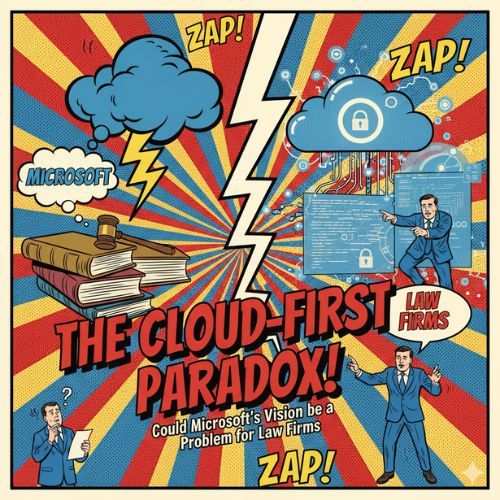
The “Cloud-First Paradox” is a design philosophy from Microsoft that could create a major problem for legal professionals and other business users. While this approach is meant to provide seamless, integrated experiences for the average consumer, it actually introduces significant conflict and frustration for professionals who must navigate multiple identities—such as a personal account, a firm account, and various client accounts.
The issues aren’t just minor bugs; they are a direct result of Microsoft’s business strategy to push users toward a single cloud-centric identity from the very beginning, often starting with the Windows 11 installation. For a professional, particularly those on Bring Your Own Device (BYOD) laptops, this creates friction because a personal Microsoft Account (MSA) often conflicts with business or client accounts. This is a problem with the licensing model, which treats all business users the same regardless of their organizational size or their ability to demand better from Microsoft.
Ultimately, this “move fast and break things” approach forces professionals into a product that isn’t ready, leading to tangible risks like data breaches, compliance violations, and a loss of billable hours. The article concludes that professionals must shift from a reactive mindset to a proactive, strategic one, evaluating new tools not just on their potential, but on their stability and security.
Not So “Modern” Outlook
I have a confession to make: I’ve been dreading an inevitable move to what’s called “Modern Outlook,” which looks, feels, and behaves like the cloud version of Outlook. I’ve always believed in eating the same ‘dogfood’ I feed my users. So, when I saw the writing on the wall that Microsoft would be forcing the switch to Modern Outlook in early 2026, I bit the bullet and made the change early.
What I’ve experienced since then has been an absolute nightmare.
My daily workflow is a constant stream of bizarre account conflicts, with hyperlinks refusing to open or trying to log me into the wrong account. Spellcheck words poorly as the original version with their mascot “Clippy.” And forget about it remembering your preferences.
This isn’t Burger King — you’ll have it Microsoft’s way is the clear message.
I grew up in the nascent days of the Microsoft ecosystem. In fact, many large organizations relied on a product called Lotus Notes for everything from email to databases and intake forms. And, I do believe large organizations are going to want to build and connect their AI capabilities around their core infrastructure. For most law firms, my recommendation continues to be to lean into Microsoft and centralize your knowledge within it’s bounds because it should — theoretically — give you the most flexibility as the technology changes. So I’m not here to hate on Microsoft. But I do think there’s a problem here that needs a look.
My initial reaction was to troubleshoot it as a series of isolated bugs or my own misconfigurations. But the more I researched the issues, the more I realized they probably aren’t just glitches. They appear to be symptoms of a profound architectural and strategic shift by Microsoft toward a cloud-centric, identity-driven ecosystem.
I’m calling this the “Cloud-First Paradox”: a design philosophy that, while intended to create seamless, integrated experiences for the average consumer, actively introduces conflict and friction for the professional who must fluidly navigate multiple distinct organizational identities. It’s a tension between a corporate strategy and a professional reality.
Multiple Identities and The Professional’s Dilemma
Individuals in traditional employment roles, who work solely for one employer, often find that a single Microsoft Work Account meets their needs. But a growing class of professionals— professional services firms, freelancers, consultants, and agencies that work with multiple clients—operate in a multi-identity world. They may have a personal Microsoft account, a a Work Account, and one or more client accounts.
The core of the “Cloud-First Paradox” is that Microsoft’s ‘modern’ systems are not navigating this complexity gracefully. The conflict started for me when I switched over to Modern Outlook a few weeks ago. But it actually started the last time I wiped my laptop and install Windows 11. When setting up a ‘new’ machine, Windows makes a deliberate and aggressive push to mandate a Microsoft Account (MSA) as the default sign-in. You used to be able to disconnect the device from WiFi and work around this issue, but Microsoft has made that even harder for a regular person to accomplish. Yes, the technical strong preference for those Microsoft-connected experience has existed for a number of years, but this appears to be part of a new business strategy designed to integrate users into its vast cloud ecosystem from the outset.
While you may think that these issues will be resolved before you’re forced to make the change. Not necessarily true. And it’s not only based on size of organization.
That’s right — Microsoft Business subscriptions for orgs up to 300 users — will be impacted soon according to Microsoft’s publications on the timeline. This article does a good job of breaking down the differences, so no need to cover here. The other risk I’ve watching is for organizations that are completely or mostly Bring Your Own Device shops. If Powerboss Attorney owns their own laptop, it’s probably associated with a Personal account. If you’re also on a Business level plan, it seems likely you’d experience the same issues I am.
The sad truth is that Business users—regardless of whether they’re an artists or law firms — are treated the same under Microsoft’s licensing. These folks don’t have the power power or sway to demand Microsoft slow it’s proverbially roll the way large enterprise subscribers have done over the years.
The frustrating part? Even with my own research after rolling out new tech for decades, I can’t be 100% positive about what’s going on under the hood. I’ll break down my strong hunch below, but I’ve been unable to find anyone with a verified solution yet. The fact that a user can’t be sure whether an issue is a bug, a feature, or a security risk is deeply troubling. It feels like we’re being forced into a product that isn’t ready. For a profession built on precision, trust, and confidentiality, these aren’t minor inconveniences. They are a direct professional liability with quantifiable risks like data breaches, compliance violations, and the erosion of billable hours.
Different Product, Similar Experience
My personal experience with the “Cloud-First Paradox” and Modern Outlook feels very similar to what an expert found when testing Microsoft’s new AI tools. In a recent published on Legaltech Hub article, Brandi Pack of UpLevel Ops—details her experience testing Microsoft’s Copilot Studio. Pack set out to build a simple FAQ bot, but what she got was:
…”a system that could not reliably read its own source material, a helper agent that occasionally seemed to forget whether it was guiding me or acting as the bot itself, and more worryingly, snippets of my planner activities and meeting notes appearing in the middle of test runs. It was a confusing, glitchy, and at times unsettling experience.”
Pack goes on to summarize by saying, “Persistent glitches, rigid workflows, and unpredictable behavior stood in stark contrast to the speed and flexibility we’ve seen from GPTs.” Remember, many of these other GPTs have access to the same OpenAI technology Microsoft is leveraging. So this isn’t an “AI problem.” I
Pack notes that “when teams are forced to work with tools that don’t deliver, frustration sets in fast”. That frustration can stall adoption or, even worse, make people give up on AI before it even gets going. This is a critical point for the legal community. The author’s findings echo my own in that we need to look beyond the marketing hype and truly understand what works and what breaks. It’s a testament to the idea that just because a new tool is available, it doesn’t mean it’s ready for a profession built on precision and zero-defect work.
Pack’s article provides a necessary, grounded look at a tool that is at the cutting edge of legal technology. She reminds us that Legal Operations is the bridge between innovation and governance, a role that is critical to getting AI right.
For a deeper dive into what worked, what broke, and why legal teams should care, check out the full article here: https://www.legaltechnologyhub.com/contents/inside-copilot-studio-what-worked-what-broke-and-why-legal-teams-should-care/
The Road Ahead: From Reactive to Proactive
The challenges posed by the “Cloud-First Paradox” and the frustrating experience with tools like Copilot Studio require a shift in mindset. We cannot simply be reactive, troubleshooting each new problem as it arises. Professionals and the firms that support them must transition from a reactive troubleshooting mindset to a proactive, strategic one.
This requires a new level of diligence. We must be inquisitive and assertive, pushing back on the idea that “move fast and break things” is a viable strategy for a profession with such high stakes. This means evaluating new tools not just on their potential, but on their stability, security, and ability to handle the complexities of a multi-client, multi-identity workflow.
It means advocating for better from our technology providers. We need tools that are designed for the realities of modern professional life, not just for the average consumer. In a world where professional success depends on seamless interaction with an array of clients, this shift in perspective is no longer optional; it is a prerequisite for productivity and security.
If you’re up for some more #wtf reading, check out my post on the exposure of ChatGPT leaks.
Share This Story, Choose Your Platform!
It's a newsletter so hot, that even global warming can't keep up.

Cheryl Wilson Griffin
Cheryl Wilson Griffin is a seasoned legal tech expert with experience on both the buy and sell side of legal. She holds an MBA with a concentration in the Management of Information Systems, along with prestigious CIPP/E, PMP, and ITIL certifications, providing her with a unique perspective on the intersection of law, technology, and project management. With over two decades of experience working in legal tech, Cheryl has gained invaluable insights into the challenges and opportunities faced by legal professionals in the digital era. Cheryl is the VP of Vendor Advisory at Legaltech Hub, the leading provider of insights, analysis, and know-how specifically tailored to lawyers and legal professionals.